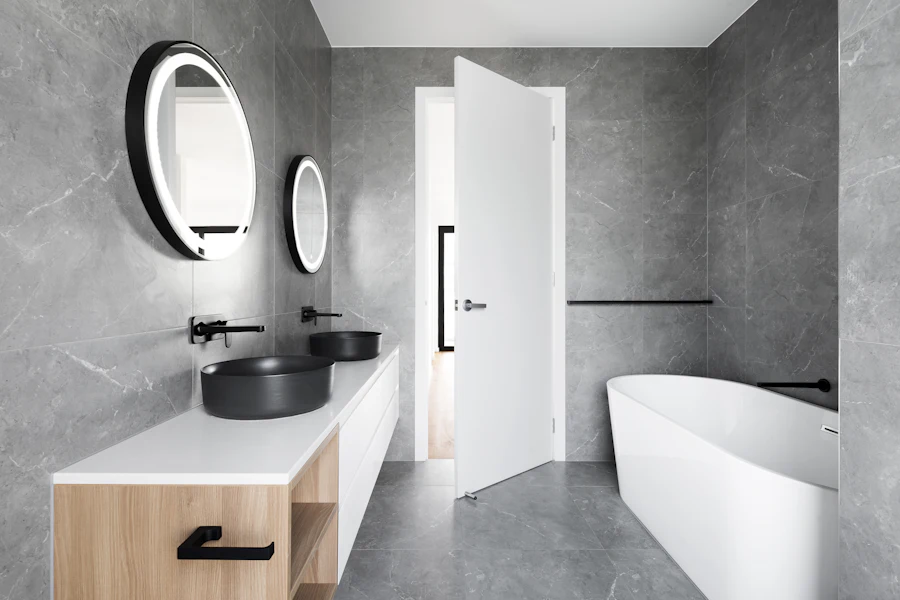
Bathroom tiling in Bromley done properly starts before the first tile: old tiles off, walls made flat, cement backer board in wet areas, tanking around the shower, then flexible adhesive, straight grout lines and silicone at every joint. Our free referral introduces vetted local tilers who quote in writing after a survey.
What Good Bathroom Tiling Looks Like, and How to Check It
Good tiling has flat walls behind it, cement board rather than plasterboard in wet areas, a tanking membrane around the shower, full-size tiles set out to avoid slivers, even grout lines, and silicone only at movement joints, never as a filler. You can check most of it yourself before the tiler leaves.
| What to look for | Good | Warning sign |
|---|---|---|
| Behind the tiles | Cement backer board in the shower zone, walls flattened first | Tiles straight onto plasterboard or old tiles |
| Waterproofing | Tanking membrane over the shower area, lapped into the tray | “The grout will keep it out” |
| Setting out | Balanced cuts at both ends of a wall, no slivers at the corner | A 20 mm strip of tile at one edge |
| Grout lines | Even width, level, and running true across walls | Lines that step or wander |
| Silicone | Neat beads at internal corners and around the tray | Silicone hiding a gap between tiles |
| Finish | Flush tile faces, no lippage, cut edges hidden | Sharp exposed cuts, tiles proud of their neighbours |
British Standard BS 5385 advises against gypsum plasterboard in areas that are frequently or continuously wetted, which is why board choice matters in a shower.
Bathroom Tiling in Bromley, Step by Step
Bathroom tiling runs in a fixed order: strip the old tiles, repair and flatten the substrate, fix backer board in wet areas, tank the shower, set out the tiles, fix them with a suitable adhesive, grout, then silicone the movement joints. A full bathroom, walls and floor, typically takes about four days plus setting time.
- Strip-out: old tiles come off, and usually take the face of the plasterboard with them. Expect to replace boards in the shower zone.
- Substrate: walls flattened, loose plaster removed, timber floors overlaid with ply so they don’t flex.
- Backer board: fitted in the shower and bath area, joints taped.
- Tanking: membrane or liquid coating over the wet zone, lapped into the tray or bath.
- Setting out: tile positions planned so cuts are balanced and full tiles sit where the eye lands.
- Fixing: flexible, polymer-modified adhesive; S1 or S2 on timber floors and under large-format tiles.
- Grouting and sealing: flexible grout on floors and heated floors, cementitious grout in tanked wet areas, silicone at every internal corner and around fittings.
Ready for a survey? Call 020 7946 0123 or see bathroom installation for the full refit sequence.
Tiling Older Bromley Homes: Uneven Walls and Timber Floors
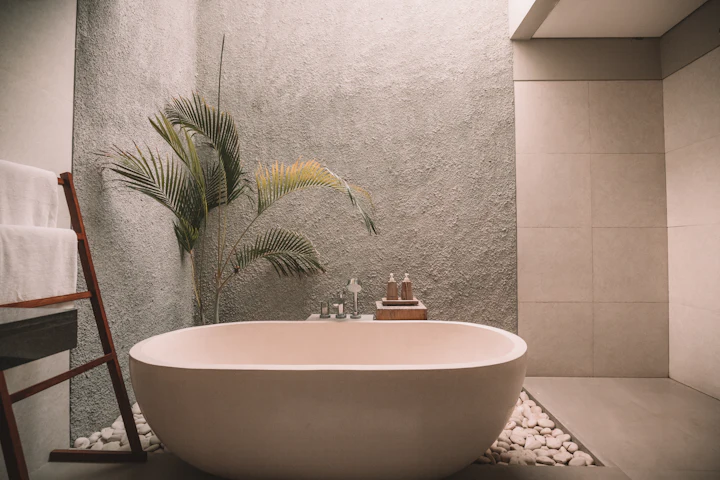
Bromley’s housing tests tilers. Around one in six homes pre-date 1919 and three in ten are interwar, so walls are rarely flat, corners rarely square, and upstairs floors are timber that flexes. In Victorian terraces around Penge and Beckenham, stripping tiles often exposes failed render or blown plaster to fix before any board goes on.
- Uneven walls: dot-and-dab or a levelling coat first; large-format tiles show every hollow, so flatness matters more the bigger the tile.
- Timber floors in the 1930s semis of West Wickham and Petts Wood: ply overlay, flexible adhesive and grout, and lighter tiles rather than heavy stone.
- Hard water: Bromley’s supply marks grout and glass quickly. Epoxy or well-sealed grout, and glass with a protective coating, cut the cleaning.
- Conservation areas such as Chislehurst and Park Langley: tiling is internal and unaffected, but any new vent through an outside wall may need consent.
Bathroom Flooring Options for Bromley Homes
Bathroom flooring needs to be waterproof, slip-resistant when wet and suited to the subfloor beneath it. Porcelain tile is the durable choice, and natural stone, slate, marble or mosaic work where the floor is stiff enough; in period properties, a Victorian-pattern floor suits the house; luxury vinyl tile is warmer and forgiving on timber floors; sheet vinyl is quick and cheap; microcement gives a seamless finish but needs a specialist. Slip resistance matters more than looks in a bathroom.
| Flooring | Pros | Cons | Suits |
|---|---|---|---|
| Porcelain tile | Hard-wearing, waterproof, works with underfloor heating | Cold without heating, needs a flat, stiff floor | Concrete floors, refits with underfloor heating |
| Ceramic tile | Cheaper, wide choice | Softer than porcelain, can chip | Walls and low-traffic floors |
| Luxury vinyl tile | Warm, quiet, tolerant of slight movement | Seams can lift if water sits | Timber floors in older homes |
| Sheet vinyl | Fast, seamless, cheap | Less durable, can tear | Cloakrooms, rentals |
| Microcement | Seamless, works over existing floors | Specialist skill, sealing needed | Wet rooms, design-led rooms |
For slip resistance, ask for the wet pendulum test value (PTV): 36 or above means low slip potential when wet, which is what a bathroom floor needs. An “R” rating is a different test and doesn’t reliably translate.
Standards and Regulations for Bathroom Tiling in the London Borough of Bromley
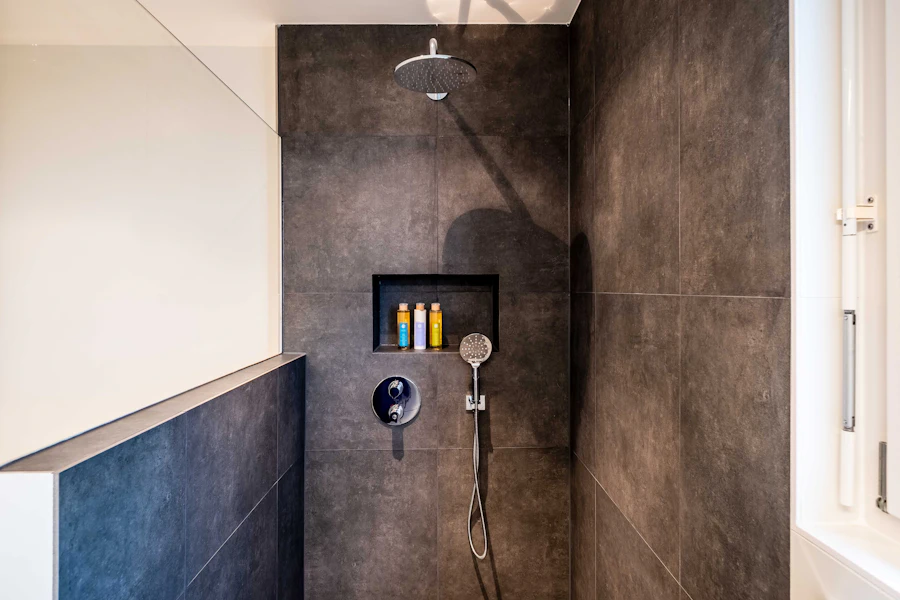
Tiling isn’t controlled work under the Building Regulations, but the things around it are: electrical underfloor heating is notifiable under Part P, a new extractor comes under Part F, and BS 5385 sets the code of practice for tiling, including wet areas. In a conservation area, only external changes need consent.
- BS 5385: the British Standard for wall and floor tiling. Part 4 covers wet areas and calls for a tanked, watertight structure and water-resistant materials behind the tiles in frequently wetted areas. BSI knowledge
- Slip resistance: the pendulum test (BS 7976) is the UK’s recognised method; specify a wet PTV of 36 or more. HSE slip resistance guidance
- Part P: electric underfloor heating and lighting in a room with a bath or shower must be fitted or certified by a registered electrician. GOV.UK: building regulations approval
- Part F: keep or replace the extractor when you retile. Approved Document F
Comparing Bathroom Tiling Quotes in Bromley
Compare tiling quotes on preparation, not price per square metre. Each should say whether tile removal and board replacement are included, what backer board and tanking will be used, the adhesive and grout type, how setting out will be done, and whether floor overlay or underfloor heating is priced. A quote with no preparation line means tiles on whatever’s there.
- Old tile removal and disposal included?
- Backer board in the wet zone, and a tanking system named?
- Flexible adhesive and grout on timber and heated floors?
- Setting out agreed, with cuts balanced?
- Underfloor heating and any electrics certified under Part P?
- Workmanship guarantee, in writing
See also bathroom renovation in Bromley and wet rooms, where tiling and tanking meet. What a tiling service typically charges per project, from published sources, is in our bathroom costs guide.
Bathroom Tiling Questions from Bromley Homeowners
Do bathroom fitters do tiling?
Many do, and some bring in a specialist tiler. Either way, check who prepares the walls, whether backer board and tanking are included, and who’s responsible if a tile fails.
Can you tile over existing tiles?
Sometimes, on sound walls outside the shower zone, but it adds thickness, hides problems and often fails around the bath. Stripping back is the safer route in most bathrooms.
Glossy or matte tiles for a bathroom?
Gloss brightens a small room and wipes clean but shows limescale in hard water; matte hides marks, suits most colour schemes and gives better grip on floors. Ask the tiler’s advice for the space. Use a slip-rated matte or textured tile underfoot.
What do tilers charge per hour or per square metre?
Most bathroom tiling is priced per job or per square metre rather than by the hour, with preparation, tile removal and tanking priced separately. Published UK ranges, and what pushes a tiling project up, are in our costs guide.
How long does bathroom tiling take?
A full bathroom, walls and floor, is typically about four days, plus time for adhesive and grout to set before the room is used.
Last reviewed: 1 October 2026.